Innovation is often celebrated as a driver of growth and competitive advantage. Yet for many organisations, one persistent challenge remains: how do you measure whether innovation is actually creating value?
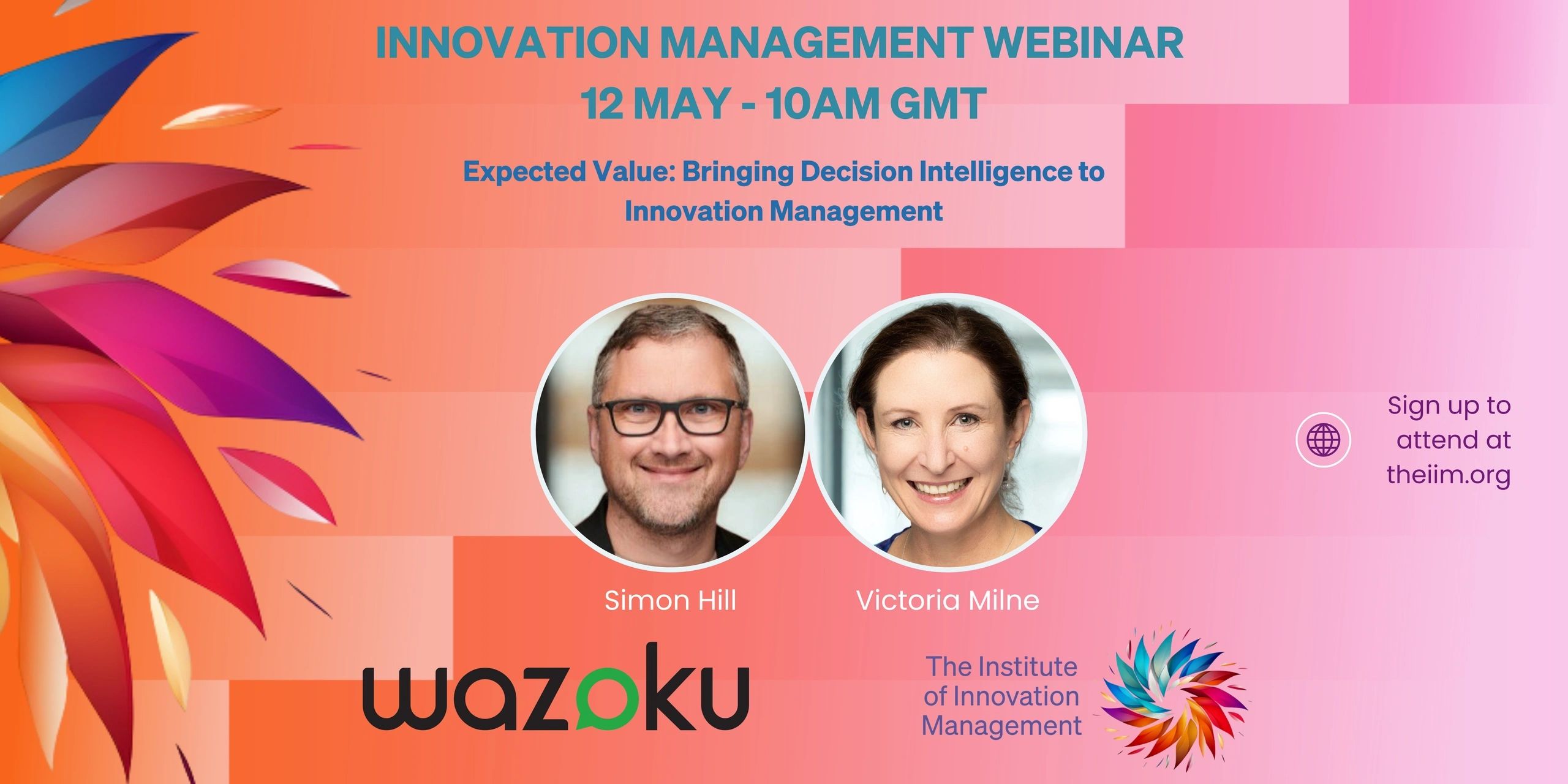
This question was explored in a recent Institute of Innovation Management (IIM) webinar hosted in partnership with Wazoku. Simon Hill, CEO and Founder of Wazoku and author of Expected Value, introduced a practical framework designed to help organisations move beyond measuring innovation activity and towards measuring innovation performance.
The Innovation Measurement Challenge
Most organisations can report on innovation activity. They can count ideas submitted, workshops delivered, projects launched, or investment allocated to innovation initiatives.
However, activity does not necessarily equate to value creation.
Too often, innovation leaders struggle to demonstrate the direct contribution innovation makes to strategic objectives and business performance. As a result, innovation programmes can be difficult to justify, particularly during periods of economic uncertainty when budgets face greater scrutiny.
The webinar challenged organisations to rethink how they evaluate innovation, arguing that better decision-making requires better metrics.
Introducing Expected Value (xV)
Drawing inspiration from performance analytics used in elite sport, Simon Hill introduced the concept of Expected Value, or xV.
The model provides a structured way to compare innovation opportunities by evaluating four key dimensions:
- Confidence
- Potential value
- Time sensitivity
- Strategic fit
Together, these factors create a more balanced view of an innovation opportunity and provide decision-makers with a practical framework for prioritisation and investment.
Rather than relying on intuition or incomplete data, organisations can use xV to assess the relative strength of competing innovation initiatives and make more informed portfolio decisions.
From Idea Volume to Value Clarity
A recurring message throughout the session was that innovation success should not be measured by the number of ideas generated.
High idea volumes can create the appearance of innovation, but without a robust evaluation framework organisations risk investing in projects that consume resources without delivering meaningful outcomes.
The xV approach encourages leaders to focus on value potential rather than activity levels. This shift helps organisations understand not only which opportunities deserve investment, but also which projects should be stopped before significant resources are committed.
In this sense, effective innovation management involves making disciplined decisions about what not to pursue, as well as what to support.
Decision Intelligence and Modern Innovation Management
The webinar highlighted the growing importance of decision intelligence within innovation management.
As organisations face increasing complexity, uncertainty, and technological change, decision-makers are required to evaluate larger volumes of information than ever before. Traditional approaches often struggle to balance competing priorities, multiple stakeholders, and uncertain outcomes.
Decision intelligence provides a framework for making these choices more transparent, evidence-based, and strategically aligned. By combining structured assessment criteria with organisational objectives, innovation leaders can improve both the quality and consistency of investment decisions.
This aligns closely with the broader trend towards professionalising innovation management and developing innovation as a disciplined management capability rather than an isolated activity.
Creating More Effective Innovation Portfolios
Another important theme was portfolio management.
Innovation portfolios frequently contain initiatives at different levels of maturity, risk, and strategic importance. Without a consistent evaluation approach, organisations can find themselves allocating resources based on internal politics, historical commitments, or incomplete information.
The Expected Value framework offers a way to compare opportunities using a common language and set of criteria. This allows leaders to make more objective decisions about resource allocation, portfolio balance, and strategic priorities.
The result is greater transparency and a clearer understanding of where innovation investments are expected to deliver the greatest return.
Learning From Failure
One of the more thought-provoking aspects of the discussion was the treatment of learning and failure.
Innovation inevitably involves uncertainty, and not every initiative will succeed. However, unsuccessful projects can still generate valuable knowledge that informs future decisions.
The webinar suggested that organisations should view learning as a measurable asset rather than an unavoidable by-product of failure. By recognising the value generated through experimentation and insight, organisations can create healthier innovation cultures that encourage intelligent risk-taking while maintaining accountability.
Building a More Evidence-Based Innovation Practice
The central message from the session was clear: innovation management must evolve beyond activity metrics.
For innovation to secure sustained investment and executive support, organisations need credible, consistent ways to demonstrate value creation. Frameworks such as Expected Value provide innovation leaders with a practical method for connecting innovation activity to strategic outcomes and business performance.
By introducing greater rigour into decision-making, organisations can improve portfolio performance, allocate resources more effectively, and build stronger confidence in innovation as a strategic capability.
Looking Ahead
As innovation continues to play an increasingly important role in organisational success, the demand for better measurement will only grow.
The Expected Value model represents a significant step towards creating a common language for innovation performance, helping organisations move from intuition to evidence, from activity to outcomes, and from experimentation to demonstrable value.
For innovation professionals seeking to strengthen decision-making, improve portfolio management, and demonstrate strategic impact, decision intelligence may become one of the most important capabilities of the future.
Webinar Speaker: Simon Hill, CEO & Founder of Wazoku and author of Expected Value.